
How to Make Sense of Casino Side Bets
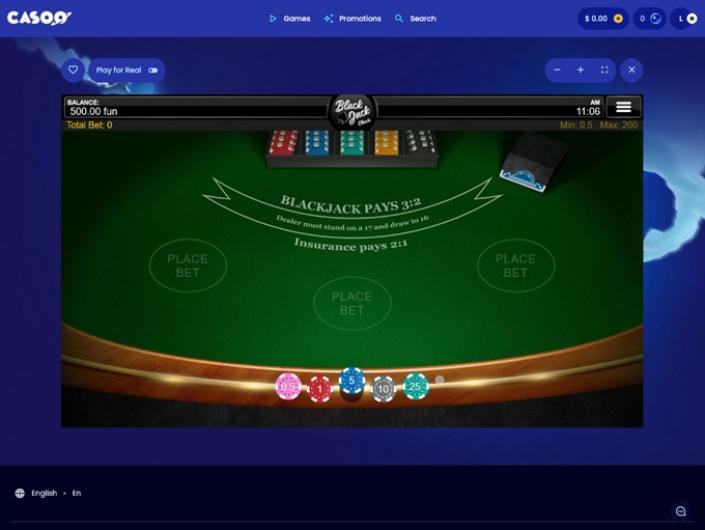
Stepping up to a casino table or opening a live dealer lobby online shows a familiar scene: the main game you came to play sits front and center, while a constellation of smaller wagering circles, checkboxes, or toggle buttons surrounds it. Those optional extras are side bets, and they have reshaped the gambling landscape across Canada over the last decade. At bonus code casoocasino, side bets are featured prominently across our blackjack, baccarat, and poker-style tables in both digital and live dealer formats. They guarantee multiplied payouts on rare card combinations, but they also carry a fundamentally different mathematical structure than the base game. Understanding that structure is not about learning every paytable you encounter. It is about developing a framework for judging whether a side bet aligns with your session budget, your tolerance for volatility, and your appetite for the specific kind of suspense they introduce. This article explores the mechanics, the math, the psychology, and the practical decision points that enable you to approach side bets as an informed player rather than someone betting blindly on a colorful extra circle.
How Device Choice and Game Format Influence Side Bet Engagement
The platform you use to play—desktop, tablet, or smartphone—subtly shapes how you approach side bets, and the differences reach beyond screen size. On a desktop setup with a large monitor, the table layout seems spacious, and side bet areas are plainly delineated with distinct graphical elements. You have the visual breathing room to study the paytable between hands and make deliberate wagering choices without feeling rushed. The live dealer stream on desktop often places the side bet statistics, recent win history, and progressive totals in adjacent panels that remain visible throughout the session, creating an information-rich environment helpful to considered decision-making. Mobile devices, by contrast, condense the same interface into a smaller vertical or horizontal frame. Touch targets for side bets must be large enough for fingers, which sometimes places them close to the main betting area. https://www.bbc.co.uk/programmes/b04kfn4p The result is a faster, more tactile betting flow that can dim the distinction between main wager and side wager if you are not paying close attention.
At Casoo Casino, our platform conforms responsively across all device types, and we have dedicated in ensuring that the side bet toggle functionality is equally clear on a five-inch phone screen and a twenty-seven-inch monitor. The live dealer blackjack tables on mobile include a swipeable betting panel that separates the main bet circle from side bet options by a distinct visual gutter. Virtual table games offer a pre-bet confirmation step that presents the total amount committed across all active wager positions before the deal begins, giving you a final review opportunity regardless of device. Game format also plays a role: virtual table games, driven by random number generators, process hands faster than live dealer games because there is no physical card handling or human pacing. That faster tempo means side bet losses can build up more rapidly if you leave them engaged by default. Live dealer games create a natural rhythm through card shuffling, chip placement by the dealer, and player decision time, which supplies more opportunities to reassess between hands. Choosing the game format that suits your preferred decision-making speed is itself a side bet strategy, one that costs nothing to implement but can meaningfully affect your session experience.
The Role of Side Wagers in Loyalty Schemes and Promotions
Reward systems and rewards point systems occasionally handle side wagers otherwise than main game wagers, and the disparity is worth investigating before you commit large amounts. Numerous programs calculate points depending on total wagering volume, which appears to include side wager activity in the same way. Nevertheless, operators commonly implement weighting systems wherein low-edge primary games count at lower rates, while higher-edge side wagers may count at the complete rate or even carry a bonus multiplier. The reasoning from the operator’s perspective is simple: they are prepared to reward the types of wagers that yield more theoretical revenue per unit wagered. This generates a paradoxical incentive wherein ancillary bets, despite their worse underlying math, can hasten movement toward activating a bonus or reaching a VIP tier. The net value calculation becomes more complicated because the rewards advantage somewhat counterbalances the elevated projected loss, though rarely to a degree that entirely eliminates the shortfall.
Promotional campaigns add another layer. Tournaments, leaderboard races, and mission-based challenges occasionally incorporate side bet outcomes as qualifying criteria or bonus point triggers. A weekend blackjack tournament might award extra points for hitting a suited pair side bet, or a baccarat challenge could require a Dragon Bonus win to complete a mission card. These temporary overlays change the localized value equation for the duration of the promotion. At Casoo Casino, our promotions page details the terms of any active campaigns, including eligible games and whether side bets count toward wagering requirements on bonus funds. We also disclose in our general terms how different game categories contribute to playthrough obligations. A common scenario involves a deposit match bonus with a thirty-five-times wagering requirement: blackjack hands might contribute at twenty percent toward that requirement, while side bets might contribute at one hundred percent because of their higher built-in margin. That higher contribution rate does not make side bets a clever way to clear a bonus; it simply reflects the casino’s awareness of where the mathematical advantage lies. Reading the fine print on promotional mechanics gives you the data to decide whether side bet participation during a bonus period serves your objectives or merely accelerates turnover without tangible benefit.
The Most Typical Side Bet Groups Across Table Games
Side bets group into identifiable families that repeat across different games and software providers, and learning to identify these families aids you swiftly judge a new option without examining an unfamiliar paytable from scratch. The greatest family is the poker-style side bet, which judges your initial cards or a combination of your cards and community cards against standard poker hand rankings. Examples comprise Three Card Poker, Caribbean Stud’s progressive, and the 21+3 wager in blackjack that merges your two cards with the dealer’s upcard to create a three-card poker hand. These bets draw because the hand rankings—flush, straight, three of a kind—are common, and the payout ladder provides several intermediate winning tiers that lessen the volatility slightly compared to all-or-nothing propositions. The second major category is the pair-based side bet, exemplified by Perfect Pairs in blackjack, which gives distinct amounts for a mixed pair, a colored pair, or a perfect suited pair.
A third family includes total-based and outcome-prediction wagers that analyze the sum, color, or composition of the cards rather than ranking them into poker hands. Baccarat side bets often fall into this category: predicting the exact total of the Player or Banker hand, wagering on a specific combination like a natural eight or nine, or betting on the difference between the two hands. These tend to have fewer payout tiers than poker-style bets and correspondingly higher top-end payouts, sometimes reaching thirty-to-one or more. Dragon Bonus and Panda 8 are prominent examples in baccarat that reward particularly decisive winning margins. A fourth, more specialized category is the bust and streak bet family, where you wager that the dealer will bust, that a certain number of consecutive wins will occur, or that a specific card sequence will unfold. These vary widely in house edge and structural complexity. At Casoo Casino, our library organizes games by provider, and each provider implements these categories with slight rule variations and payout adjustments. Spotting which family a side bet belongs to gives you an immediate mental model for its volatility, its hit frequency range, and the type of bankroll pacing it encourages.
Detecting Side Bets by Game Type
- Blackjack wagers: 21+3 (poker-style combination of player’s two cards and dealer’s upcard), Perfect Pairs (player’s first two cards match), Bust It (dealer busts with eight or more cards), Lucky Ladies (player’s hand totals twenty), and progressive jackpot options that award rising payouts for same-suit aces or certain four-of-a-kind sets.
- Baccarat extra bets: Dragon Bonus (rewards natural wins and decisive wins), Panda 8 (Banker wins with three cards totaling eight), Tiger 7 (Banker wins with three cards totaling seven), and several exact-total and pair forecasts that deliver steep payouts on rare events.
- Roulette wagers: adjacent-number bets and racetrack bets that span adjacent wheel segments, declared bets standard in French roulette such as Voisins du Zéro and Tiers du Cylindre, and certain electronic platforms offering RNG-based bonus rounds separate from the core spin.
- Poker-style extra bets: Caribbean Stud progressive (wager on your five-card hand hitting a flush or better), Casino Hold’em AA bonus (rewards based on the player’s hole cards and the first three community cards), Three Card Poker pair plus and six-card bonus options.
Each game type integrates its side bets variously into the user interface. In blackjack, you typically click a dedicated chip area separate from the main betting circle. In baccarat, the side bet zones often sit above or beside the standard Player, Banker, and Tie sections, clearly labeled with the specific wager name. Roulette’s racetrack is a visual representation of the wheel sequence rather than a separate bet zone per se, but it serves as a side bet aggregator by allowing you to place complex multi-chip wagers with a single click. Understanding the interface mechanics matters because it is easy to accidentally include a side bet when you intended only to play the base game, especially on mobile screens where touch targets are compact. At Casoo Casino, our table limits and side bet minimums are displayed on-screen before each hand, and the bet placement areas are color-coded to distinguish mandatory from optional wagers. Taking a moment to orient yourself to the layout before your first real-money hand avoids unintentional exposure to a volatility profile you did not plan for.
Understanding a Side Bet Paytable and Calculating What It Truly Costs
A side bet paytable appears like a scoreboard of appealing numbers: fifty to one, one hundred to one, five hundred to one for the top tier. Those headline figures give you almost nothing useful in isolation. To judge a side bet honestly, you need to analyze the entire distribution of outcomes, including the overwhelmingly likely result of losing your wager outright. The first number to identify—and it is not always displayed on the felt itself—is the house edge or theoretical return-to-player percentage. Many software providers disclose RTP in the game’s help or information menu, and this single figure condenses the entire paytable into an actionable metric. A side bet with a ninety-two percent RTP costs eight dollars in expected loss for every one hundred dollars wagered over the long term. A side bet with a ninety-six percent RTP amounts to four dollars for the same volume. That four-dollar difference per hundred signifies a doubling of the effective cost, which accumulates dramatically across thousands of hands.
When RTP data is not instantly shown, you can conduct a rough stress test on the paytable yourself by concentrating on the lowest payout tiers. The most indicative indicator of a side bet’s cost is the frequency with which it pays out at all, even a modest amount. Some side bets give back your stake or provide small multiples on relatively common occurrences, such as a mixed pair or any non-suited three-card flush. These common small payouts reduce the psychological experience of losing streaks and somewhat offset the house edge. Other side bets have a blunt all-or-nothing structure where only top-tier hands trigger a payout, and everything else is a total loss. The latter design generates a cheaper minimum stake for the casino to provide—because wins are so rare—but the effective cost per hand is severe. At Casoo Casino, we urge players to consult the paytable screens that are part of every live dealer and virtual table game. They detail each winning hand’s description, the number of decks in play, and any special conditions like suited requirements, providing you the raw material to assess whether the bet’s structure aligns with your session goals.
Fixed Payouts vs. Progressive Jackpots and the Role of Initial Amounts

Fixed-payout side bets offer a set return for each winning hand, and these amounts do not change regardless of how many players win or lose before you. The house edge on a fixed-payout bet is steady and determinable from the moment you sit down. Progressive side bets add a moving part: a portion of every wager across a network of tables contributes to a rising jackpot that resets to a seed value after someone lands the top prize. The seed amount and the contribution rate dictate how quickly the jackpot becomes interesting. A generously seeded progressive with a high contribution rate can periodically reach levels where the combined RTP of the fixed payouts plus the expected jackpot share nears or exceeds one hundred percent. These conditions are not mysteries hidden behind vault doors; they are numerically derivable from publicly visible information, though the calculation demands knowing the exact probability of hitting the jackpot hand. Casoo Casino’s live dealer progressive games show both the current jackpot value and, in the information panel, the probability of achieving the top-tier hand for standard deck configurations. Even without performing the calculation exactly, watching the jackpot’s growth pattern over a session can give you a evaluative sense of whether it is currently near its low-reset floor—where the side bet is at its most pricey—or at an atypically elevated level where the value proposition has significantly improved.
What Distinguishes a Side Bet from the Main Game from a Mechanical Standpoint
The primary distinction between a side bet and the primary wager on any table game hinges on the independence of outcomes and the payout structure. When you place a standard bet at a blackjack table, you are engaging in a multi-decision game where your choices—hitting, standing, doubling, splitting—directly impact the hand’s result. That agency does not extend to side bets. A Perfect Pairs wager, for example, settles purely on the first two cards you receive, regardless of what you or the dealer do afterward. The bet is settled before the main game even begins in earnest. This decoupling signifies that side bets operate as a parallel gambling product riding on the same deal, not as an enhancement to the game you already know. The return-to-player percentages, the frequency of wins, and the variance profile all operate independently, and they are almost always less favorable to the player in mathematical terms than the optimally played base game.
The payout architecture of side bets amplifies their distinct character. Whereas a winning blackjack hand commonly pays even money or three to two, a side bet might pay five to one for a suited pair, twenty-five to one for a suited three-of-a-kind in certain poker variants, or even hundreds to one for a specific aligned jackpot combination. This lopsided structure—many small losses punctuated by very occasional large wins—defines the high-volatility nature of the product. At Casoo Casino, you will notice that side bet paytables are published directly on the virtual felt or in an adjacent information panel. Reading those tables before wagering is crucial because two side bets that appear similar, such as 21+3 and Top 3, can have dramatically different hit frequencies and maximum payouts. The base game asks you to manage a steady exchange of small edges; the side bet asks you to survive long dry spells in anticipation of a rare windfall. Recognizing that you are effectively playing two separate games with a single deck of cards is the first cognitive step toward sensible engagement.
The manner Side Bets Are Rated Differently Than Base Games
The house edge on a well-played blackjack hand can dip below one percent under favorable rules. No side bet nears that territory. The very feature that makes side bets promotable—the potential of a large payout on a small wager—necessitates the casino to build in a substantial mathematical margin to cover the infrequent jackpot-level payouts. Typical side bet house edges range from three percent on the more lenient end to well over ten percent on some progressive-linked or visually elaborate options. This does not make side bets a “mistake” in absolute terms; it means they fulfill a different function in a gambling budget. A ten-dollar base game wager with a half-percent house edge runs you roughly five cents in expected loss per hand. A five-dollar side bet with a seven-percent house edge costs thirty-five cents in expected loss per hand, despite being half the nominal amount. The absolute expected loss is seven times higher on the smaller wager because of the margin differential.
Progressive side bets make more complex this calculation additionally because a portion of each wager funds a growing jackpot pool. The theoretical return on these bets shifts as the jackpot grows, and at some threshold the combined expected value of the fixed payouts plus the jackpot contribution can transform the bet into a mathematically positive proposition. Those moments are rare and difficult to spot without detailed information about the progressive meter’s seeding and contribution rates. At Casoo Casino, our live dealer tables showing progressive side bet totals allow you to watch jackpot growth in real time. Even without seeking a positive expectation, you can determine whether the current jackpot level provides enough excitement to warrant the elevated cost of participation. The key operational principle is to never assume that a side bet’s low minimum stake makes it safe. The minimum is low precisely because the house needs volume to balance the variance on those long-shot payouts, and the accumulated small losses can quietly dominate a session’s results.
Bankroll Oversight When Side Bets Come into Play
Incorporating side bets into a bankroll strategy demands a careful budget split as opposed to treating them as hasty add-ons to your main wager. The most straightforward and most frequently suggested approach among seasoned players is to designate a separate, fixed-percentage portion of your session bankroll exclusively to side bets and to under no circumstances blur the boundary mid-session. If you come to a table with three hundred dollars for an evening of blackjack, you might determine that forty dollars of that sum is your side bet budget, with the remaining two hundred sixty dollars reserved for the main game. Once the forty-dollar side bet allocation is gone, you halt placing them irrespective of what happens at the table. This mechanical separation stops the common pattern of chasing side bet losses with main game winnings, which turns a controlled session into an uncontrolled one. The discipline is more difficult to maintain than it sounds because side bets settle quickly and can eliminate a dedicated budget in a surprisingly short run of unremarkable hands.
The minimum side bet stake compared with your main wager is another variable that calls for conscious calibration. A side bet might require only one dollar or two dollars, which looks trivial next to a twenty-five-dollar blackjack hand. But if you wager that side bet on every hand across a hundred-hand session, the total allocated to side action amounts to one hundred or two hundred dollars—an amount that rivals or exceeds your main game exposure. Professional players and advantage gamblers seldom if ever touch side bets because the mathematical cost conflicts with their edge-focused approach. Recreational players, however, are not fine-tuning solely for minimum expected loss; they are purchasing entertainment, suspense, and the chance at a memorable payout. The reasonable middle ground is to treat side bets as an occasional spice rather than a constant baseline. Placing a side bet every fifth or tenth hand, or only when the progressive jackpot crosses a self-imposed threshold, maintains the thrill while sharply lowering the aggregate expected loss. At Casoo Casino, you can switch side bets on and off for each hand independently, and there is no requirement to participate to remain at the table. That flexibility ensures a paced, intentional approach entirely feasible.
Developing a Personal Framework for Determining When to Use the Extra Betting Circle
The decision to put a side bet should come from a pre-established set of personal rules instead of an emotional impulse sparked by a winning streak, a frustrating loss, or a jackpot amount that grabs your eye. Creating that framework starts with answering a single question honestly: what am I trying to get out of this gambling session that the base game alone does not deliver. If the answer is the possibility of a disproportionate, memorable payout that alters the trajectory of the evening, then a small, budgeted side bet allocation is a rational way to chase that specific experience. If the answer is to maximize playing time and minimize the probability of busting out before you are ready to leave, side bets are counterproductive because their higher house edge and volatility accelerate bankroll depletion on average. There is no objectively correct answer; the correct answer is the one that accurately reflects your priorities and that you actually stick with when the cards are in the air.
The second pillar of a effective framework is a personal exit protocol. Decide in advance what you will do if your side bet bankroll is depleted in the initial twenty minutes of a session, or alternatively, if you hit an early large payout on a side bet. Many players reflexively reinvest side bet windfalls into more side bets, a practice that mathematically guarantees handing the money back to the house over a prolonged timeline. A more structured approach is to reserve a percentage of any significant side bet win—perhaps fifty percent—and separate it from further wagering, considering the remainder as a restocked side bet budget for the rest of the session. The exact percentage counts less than the presence of the rule itself, which serves as a circuit breaker against the cognitive blurring that takes place when a large win makes the game seem momentarily cost-free. At Casoo Casino, our responsible gaming tools include session time reminders and deposit limits that can reinforce these self-imposed boundaries by breaking the flow of play at intervals you specify, opening space to check whether your betting behavior still fits your framework.
The third pillar involves record-keeping at a level of detail appropriate to your engagement. You do not need a spreadsheet to enjoy a casual evening of blackjack. But if you find yourself placing side bets regularly and are uncertain whether they are enhancing or undermining your overall experience, tracking two simple metrics over ten sessions can provide revelatory clarity: the total amount wagered on side bets and the total amount returned. The ratio of those two numbers is your personal empirical return, and while ten sessions is too small a sample for statistical significance, it often suffices to puncture the illusion that you are “due” for a big hit or that your side bet results are better than the published odds suggest. Honest confrontation with your own data is the most powerful corrective to the selective memory that gambling naturally induces. At Casoo Casino, your account history provides a transaction-level breakdown of every wager placed and every outcome achieved, making this kind of self-audit straightforward. The goal is not to eliminate side bets from your repertoire—they exist because players genuinely enjoy them—but to integrate them into a conscious, bounded gambling practice where they serve your stated objectives rather than quietly undermining them.
How to Make Sense of Casino Side Bets Read More »